The final of our series features one of the candidates in the only contested commissioner race, the 5th District which includes Garfield and Brooks Township as well as the City of Newaygo. Once again, early voting begins this Saturday and runs through Sunday, August 4th. Election Day is Tuesday, August 6th. Absentee Ballots can be obtained until Monday, August 5th at 4pm. "Democracy cannot succeed unless those who express their choice are prepared to choose wisely. The real safeguard of democracy, therefore, is education."- Franklin D. Roosevelt Lori Tubbergen Clark A lifelong resident of Newaygo County my commitment to the betterment of our community has extended beyond my professional roles as teacher, consultant, curriculum director, and superintendent. I have often acted as a change agent, coaching individuals, and organizations, to move from status quo to new ways of thinking; fostering growth and changing perspective. I hold a Bachelor’s Degree in elementary education, a Master’s degree in Early Childhood Education, and a doctoral degree in Educational Leadership and Counseling from Eastern Michigan University. Prior to retiring from public education in December, 2021, I was privileged to serve the education community for 35 years including a 15-year tenure at NC RESA in the role of school superintendent. It has also been my honor to serve on the board of the Fremont Area Community Foundation for 9 years most recently as Board Chair. Why are you running? I am running for county commissioner because I am passionate about the positive momentum Newaygo County is experiencing, and would be excited to contribute to an effective County Commission board. One evening, in one of my former leadership roles, we held a community meeting to discuss a community project and gather input. The turnout was incredible—residents from all walks of life came together, eager to share their thoughts and support the initiative. As I listened to their stories and concerns, I was deeply moved by the community’s passion and dedication to improving our county. This experience was one of many that highlighted the power of community engagement and the importance of listening to and valuing every voice. It reinforced my belief that, together, we can achieve great things for Newaygo County. It also strengthened my resolve to continue serving and advocating for our community, ensuring that we address critical issues and create a brighter future for all residents. This moment was a powerful reminder of why I am committed to Newaygo County and why I am running for county commissioner—to harness this collective energy, drive positive change, and continue the long Newaygo County tradition of collaborating for a common good. What makes you the best candidate? As a lifelong resident of Newaygo County, I am deeply passionate about the positive momentum our community is experiencing, especially with the innovative solutions addressing our housing challenges. With my extensive experience in boardsmanship and governance, I am well-equipped to contribute effectively to our county’s continued growth and success. I have demonstrated my commitment to serving the Newaygo County community through various roles. As the NC RESA superintendent, I managed a governmental budget of approximately $25 million. Additionally, I have served on multiple boards, including the City of Newaygo TIFA board, the United Way of the Lakeshore/Newaygo County board, and most recently, as the Board Chair for the Fremont Area Community Foundation board. I am passionate and competent. What do you see as the 3 main responsibilities of the post you are seeking? County commissioners play an important role in local governance, and three of the main responsibilities include: Budget Approval: Commissioners approve the county budget, ensuring funds are allocated appropriately, and assuring we are living within our means. Personnel and Facility Management: Commissioners authorize payroll and employee benefits. They oversee county facilities, ensuring maintenance and provision. Long-range Planning and Advocacy: Commissioners participate in long-range planning and represent county interests at state and federal levels. How will you serve or better serve the public, if elected or reelected? If elected, I will leverage my skills and dedication to serve our community effectively. I will regularly attend township and City Council meetings to engage with residents, listen to their concerns, and maintain open lines of communication. By transparently keeping stakeholders informed about decisions, policies, and county projects, I aim to build trust and foster collaborative relationships. My priorities will include addressing key issues such as housing, infrastructure, public safety, rural transportation, and economic development. I will stay informed and up-to-date with local, state, and national issues that may impact Newaygo County. If elected, my goal is to make a positive impact as a county commissioner and work to drive Newaygo County forward. County/State officials' responsibilities are not well known by the community members they serve. How will you educate your constituents and help them stay informed? Keeping the public informed is an important responsibility for a county commissioner. The current County Commission Board Chair does an outstanding job of keeping the public informed. I would work to support those effective communication strategies and others, such as newsletters, press releases, open commission meetings (public comment), digital communications, and other media outlets. In your opinion what makes for an effective leader? An effective leader combines various qualities and skills to inspire, guide, and support their team. Integrity is crucial, as it involves upholding high ethical standards and building trust through consistent and transparent actions. Strong communication skills are essential for clearly articulating goals, expectations, and feedback, as well as actively listening to stakeholders and valuing their input. Empathy allows a leader to understand and address the needs and concerns of others while demonstrating compassion and support. Decisiveness is important for making informed decisions and taking responsibility for their outcomes. Accountability involves taking ownership of results and holding oneself and others accountable for their actions. Collaboration means working effectively with others to achieve common goals and building strong, cooperative relationships within the team. Lastly, inspiration and motivation are key to encouraging the team to perform at their best, recognizing their achievements, and creating a positive, productive work environmen
0 Comments
 Today we move to the race for Drain Commissioner and the responses from 2 of the 3 candidates running for the office. Once again, early voting begins this Saturday and runs through Sunday, August 4th. Election Day is Tuesday, August 6th. Absentee Ballots can be obtained until Monday, August 5th at 4pm. "The act of voting is one opportunity for us to remember that our whole way of life is predicated on the capacity of ordinary people to judge carefully and well.”-Alan Keyes Dale Twing I am a fourth generation lifelong resident of Newaygo County, a graduate of Grand Valley State University and a past local businessman. My wife Sue and I are blessed with three married daughters Honorable Melissa Dykman, Jenny Hanna and Becky Bergakker. I value our community and serve wherever I feel I can make an impact. I am currently serving on the Fremont Area Community Foundation Economic Development board, Human Trafficking Task Force, Newaygo Community Autism board and NCRESA board president. My Philosophy has been and will continue to be developing relationships and collaboration with agencies and organizations to make and keep Newaygo County the great place we love to live. Adam Campbell I grew up in Bailey, Michigan, and attended Grant Public Schools. I graduated from Grant High School in 1997. In 2001, my wife and I purchased my family farm in Grant where we raised our two sons. After graduation, I started working and utilized the welding skills that I acquired from the Newaygo County Career Tech Center. I was hired by Plummers Environmental Services to construct their industrial wastewater treatment plant, where I discovered my interest in the water treatment industry. This field opened the door to my lifelong career. Over the years, I have co-owned an environmental company and currently work as a Street Supervisor and Waste/Fresh Water Operator in the City of Newaygo. Throughout my career, I have obtained state licenses in wastewater, freshwater, and stormwater certifications, as well as gained valuable experience in drainage systems. Why are you running? Campbell: I'm running for Drain Commissioner because I believe I can make a difference in our community. With over 28 years of experience in the Environmental and Drain industry, including almost 10 years with the City of Newaygo, I am committed to improving our local drains and environment while supporting our community. Twing: I want to continue the really great projects we have started. I have years of experience and excellent relationships that I want to continue for the benefit of Newaygo County. The best part of my work is being effective through collaboration, and we've made great progress in protecting our Waters by working with Lake boards, MSU extension soil conservation, and Fremont Area Community foundation. Another term helps me to see the projects through to completion. My experience and work ethic allows me to connect and collaborate with many different groups which gets the work done more effectively and efficiently with less tax cost for citizens. What makes you the best candidate? Twing: My work ethic allows me to connect and collaborate with many different groups which gets the work done more effectively and efficiently with less tax cost for citizens.I have the required Qualifications for serving as Drain Commissioner: EGL Certification, StormWater Management, Soil Erosion Control SEC, Hazardous Waste Clean-up Management. A big part of my job is to be responsive to all calls and problems, and if they aren’t In the Drain Office Authority, to then refer our citizens to where they can get help or answers.with many different agencies and organizations allowing my office to work more effectively. Campbell: I believe I am the best candidate because I am committed to listening to my community and staying focused on the task at hand. I am confident that I can bring new ideas, and with my experience, I can make a positive difference in our County. What do you see as the 3 main responsibilities of the post you are seeking? Campbell: The three main responsibilities I see are protection, maintenance, and repair. Firstly, it's crucial to protect our most valuable resource, which is water. Secondly, maintenance involves inspecting the structural integrity of our drainage systems and lastly carrying out necessary repairs. Twing: Maintain 200+ legally established drains, issue soil erosion permits and perform inspections. Maintaining lake levels elevation established by the 27th Circuit Court, State statute requires me to be a member of the County Parks board, and six lake Improvement boards. As Chairman of Public Works I’m responsible for the coordination of recycling and household Hazardous waste collection. Applying and receiving grant funding to help support programs and reduce the County Financial commitment. How will you serve or better serve the public, if elected or reelected? Twing: If elected I plan to Work with all our Lakes to inform and help them keep their lakes healthy and ensure land values. This happens through relationships with Egle (DEQ) DNR Officials MSU extension and others, writing and obtaining grants for projects that benefit the Watershed . Also recycle as State has set new goals Campbell: As Drain Commissioner, my primary objective is to serve the public by prioritizing active listening to the needs of the county's residents. I am dedicated to finding cost-effective solutions that not only improve the efficiency of our local drains but also better serve the public. Additionally, I am committed to protecting our watershed, and ensuring the preservation of our natural environment for the benefit of our community. County/State officials' responsibilities are not well known by the community members they serve. How will you educate your constituents and help them stay informed? Campbell: I will establish a plan to keep our constituents informed about environmental issues and the importance of maintaining clean water and land. I aim to collaborate with local schools to educate our youth about the significance of preserving our environment. Additionally, I will utilize social and current media platforms to spread awareness and engage with the community. Together, we can work towards a cleaner and healthier environment for current and future generations. Twing: Very few people understand my job and I have continually attempted to educate the public with meetings, forums and presentations. I have also used social media and occasionally speak at Public Service organizations. In your opinion what makes for an effective leader? Twing: To be an effective leader you must be a good listener to citizens, employees and partners. I understand strengths and weaknesses and hire to compensate for those attributes.. I care for the people I serve and I'm ready, willing and able to commit the time and energy to get things done. Campbell: Integrity, empowerment, strategic thinking, dedication, and experience are all crucial qualities that contribute to an effective leader. These qualities not only enable me to lead effectively but also empower me to make a positive impact on the community.  Today we pose our 6 queries to the candidates for Register of Deeds. Once again, early voting begins this Saturday and runs through Sunday, August 4th. Election Day is Tuesday, August 6th. Absentee Ballots can be obtained until Monday, August 5th at 4pm. “There is no more vital right in a democracy than the right to vote. Without it, no other right is secure.”-Lawrence Goldstone Stewart Sanders Born and raised in the White Cloud area, I graduated from White Cloud, Ferris State College with a bachelor's in mathematics, and Central Michigan University (MA) administration. I taught Senior mathematics at Newaygo High School and for Baker College. Upon retirement from teaching, I was appointed to the role of Register of Deeds in 2014. I have been married to my wife Cindy for 47 years. We have two grown children and two grandchildren. We live on the family’s 130-year-old farm. Kelly Pangburn My name is Kelly Pangburn and I'm running for Newaygo County Register of Deeds. I'm the owner and real estate broker of Pangburn Properties, Inc. real estate agency. I've been selling real estate for nearly 30 years. I started Pangburn Properties, Inc. 22 years ago and in 2005 I purchased a commercial building in downtown Grant where my office is located and have been serving clients from this location ever since. The experience I gained during the housing market recession, being heavily immersed in a plethora of foreclosures, deeds in lieu, short sales, property tax foreclosures, along with working as a real estate broker for HUD (Housing and Urban Development), taught me the ins and outs of what to expect as your next Register of Deeds. Putting the recession aside, throughout my career I've utilized the Register of Deeds to research property deeds, recorded surveys, trusts, legal descriptions, judgements of divorce, chains of title, mortgages, covenants, land restrictions, site condo by-laws, sheriffs deeds, and bankruptcies. I've also utilized Mapping and Description along with Equalization over the years to ensure any splits, permanent parcel numbers and legal descriptions are accurate and can be recorded. All of this research is required of me as a real estate professional and has placed me in a unique position for a Register of Deeds candidate. I have the unique ability to understand most legal terminology. I am well versed in technology language and have the ability to create websites. I have a keen eye for design and creativity. I also have managerial, accounting, and budgeting experience and I consider myself highly organized. It would be a great honor to be elected as your next Register of Deeds. Why are you running? Pangburn: I am running because I've been serving the people of Newaygo County for the past 30 years in their real estate needs. I am the owner and broker of Pangburn Properties, Inc. real estate agency and I believe the Register of Deeds needs someone with my type of expertise. I am running because I want to serve my community and what better role for me to serve than the Register of Deeds! Sanders: It has been my honor to hold the office of Newaygo County Register of Deeds for these past 10 years and I am thankful for the trust you have bestowed on me. My team and I are working on several new projects along with the critical job of always working to protect the public record. If elected I would like to see these new initiatives realized which will enhance the information for our constituents. What makes you the best candidate? Sanders: I have 10 years’ working experience as the County’s Register of Deeds and have extensive knowledge and background regarding the State of Michigan recording requirements. I was able to introduce Electronic Recording of documents to save time and money as well as initiating Free Fraud Alert Service. My team and I are proud that our documents are fully digitized, redundantly protected, and that the public record is safe. I am always working to find best practices to help secure the public record. Pangburn: I bring a great deal of experience to this position. I have nearly 30 years of experience in the real estate industry, with a brokerage business background. I understand legal terminology, have the ability to plot legal descriptions and have a great deal of technology know how. I've been serving the people of Newaygo County for many years and will continue to do so, if you so graciously elect me. I will be able to step into this position on day one understanding how and what the Register of Deeds role is and I will effectively perform my duty. I will be representing all the people of Newaygo County and understand I work for you. What do you see as the 3 main responsibilities of the post you are seeking? Pangburn: #1. Great customer service. #2. Communication. #3. Safeguarding our records from cybercrime. Sanders: To continue, first – class, friendly and helpful customer service. To record any recordable document according to State standards pertaining to real property in Newaygo County. To pursue new technologies and best practices that will enhance the input, storage, and retrieval of information. How will you serve or better serve the public, if elected or reelected? Sanders: I will continue to educate our constituents about the role of the Register of Deeds in their lives. I, along with our Register of Deeds legislative committee, have put together a new PowerPoint teaching tool regarding the Register of Deeds office. My team and I are working on a new program to help our local Centennial farms procure the documentation necessary. I am very excited about this initiative. Pangburn: I will be an effective communicator. I will ensure that technology improvements are being made at the Register of Deeds, as our technology is seriously outdated. I will work to bring down costs to our constituents through innovation technology. I will be the voice of the people by effectively communicating their needs and desires. I will listen and I will hear you. I will collaborate with legislators, title companies, and lenders to effectively stop property fraud. I will collaborate with municipal authorities to protect our property rights. County officials' responsibilities are not well known by the community members they serve. How will you educate your constituents and help them stay informed? Pangburn: I think it would be great to be able to offer a subscription type monthly newsletter emailed to constituents informing them of the latest activities within the Register of Deeds office, legislative updates affecting them and/or the Register of Deeds office along with discussions taking place at MARD (Michigan Association of Register of Deeds). I would also like to hear from constituents allowing them the ability to communicate directly with me in regards to their questions and concerns. I believe community involvement is paramount. When new technology vendors are needed, I believe the constituents should be aware, offered the ability to give their input and recommendations, and transparency should be given at every step of the process. I will attend City Counsel and Township Board meetings regularly to communicate with constituents along with additional Board meetings where my presence is requested. I will also make regular press releases for Newaygo County publications to be shared with constituents regarding topics that affect their lives. I will make myself available for the people of Newaygo County, promising to return your calls and emails in a timely fashion. And I promise to listen. I would prefer to communicate to constituents about things that will affect their lives, I am not concerned with press releases praising myself. I believe constituents want to know how their lives will be affected by changes and are less concerned about how I intend to win another 4 year term. Another four year term will come through my ability to make progress at the Register of Deeds, actions speak louder than words. I will show up for work everyday and work for the people with an open door policy. I will make myself available for interviews and communications in every way possible. Sanders: As mentioned earlier, we have a new PowerPoint presentation that illustrates the role of the Register of Deeds office. I will continue to seek opportunities to present this information around our County. I am very excited to use this tool. In addition, I am committed to reaching out to our local schools again to make sure our young people get exposed to this part of County government. In your opinion what makes for an effective leader? Sanders: Effective leaders must have vision, passion, and a direction to lead their team in accomplishing stated goals. An effective leader must empower his/her team to work as a unit in reaching those goals and providing support as necessary. Pangburn: I believe an effective leader listens. I believe an effective leader has the ability to strategize along with the tactical ability to implement a strategy by effectively communicating the strategy to others be it big or small. I believe an effective leader should be able to see what the consumer sees and make course corrections when necessary. I believe an effective leader should fully understand the strengths and weaknesses of employees within their office and be a helping hand not a dictator. I believe an effective leader shows others they are willing to work just as hard as they do, leading by example. I believe an effective leader should be creative and an out of the box thinker. I believe an effective leader should be willing to listen to others opinions and have the discernment to recognize that someone else's idea may better than their own.  On Monday we presented the responses from our two candidates for Newaygo County Sheriff. Today we have the 2 candidates for Newaygo County Clerk. Once again, early voting begins this Saturday and runs through Sunday, August 4th. Election Day is Tuesday, August 6th. Absentee Ballots can be obtained until Monday, August 5th at 4pm. As always, elections are decided by those who show up to vote and the best vote is an informed one. Jason Vanderstelt My name is Jason Vanderstelt. I have been the Newaygo County Clerk for the past 8 years. I’m a graduate of Hesperia High School and received my Bachelor of Business Accounting from Baker College. I served in the United States Air Force as an Electrical and Environmental Specialist on F-15 aircraft. I’ve worked as an Accountant for Hackley Hospital, Powers Motor Sports, TrueNorth Community Services and beginning in February of 2012 as the Accountant for the Newaygo County Treasurer. Since beginning at the County in 2012, I’ve had the amazing opportunity of coaching youth sports. I believe that serving others and building relationships with community members is important for an Elected Official and coaching has afforded me that opportunity. I have been honored to write letters of recommendations for colleges, for jobs, or being a reference, as these young men and women enter the job market. April Pickard Hello, my name is April Pickard and I am running for Newaygo County Clerk. I've lived in Newaygo County since I was a young child. I attended Grant Public Schools where I graduated in 2000. I have 5 amazing children and a very supportive husband. I've spent most of my life volunteering for many organizations and building meaningful relationships along the way. I loved volunteering with the Special Olympics bowling and volleyball programs, as well as the Summer Games at Central Michigan University. I was part of a group who ran and coached the American Youth Soccer Organization in White Cloud for numerous years. I am a certified firefighter who spent time working in Newaygo County. I also volunteered on the Community Emergency Response Team and Medical Reserve Corps for Newaygo County Emergency Services. I have a passion for serving the community and the people who live here. I've worked for Newaygo County for 10 years now in different capacities and I currently work in the Clerk's Office as the Elections Administrator. Why are you running? Pickard: I am running for Newaygo County Clerk because I feel there is a great opportunity for a positive change in the Clerk's Office. Vanderstelt: The Clerk’s Office has changed greatly since my election in 2016. Proposals and law changes have greatly affected the Clerk’s Office. It is extremely important that our Elected Officials can lead and excel through change. I believe the residents of Newaygo County deserve to have Elected Officials that understand and care about the concerns of their constituents. I’m running again because I care about the duties of the Clerk's Office and the residents of this County and will strive to continue the great service that you deserve. What makes you the best candidate? Vanderstelt: I began my career as County Clerk in January of 2017 following four years as the Accountant in the Treasurer’s Office. I have been with the County since 2012 and that experience is extremely beneficial. I have a bachelor’s in accounting with over 20 years’ experience which has allowed me to correct audit issues prior to my election and has been a great asset as County Clerk. I’ve developed strong working relationships with Department Heads, Elected Officials and office personnel. Pickard: My love for Newaygo County, along with my dedication to public service and impeccable work ethic makes me a great candidate for the job. What do you see as the 3 main responsibilities of the post you are seeking? Pickard: The three main responsibilities of the Newaygo County Clerk are 1. To ensure Election Integrity 2.To provide excellent customer service 3. To provide support and resources to our local clerks Vanderstelt: The three (3) main responsibilities of the Clerk's Office include Elections, Vital Records and service. Duties are prescribed by law and include Clerk to the Newaygo County Board of Commissioners, Clerk of the Circuit Court, Election Board of Canvassers, Clerk of the County Election Commission, County Plat Board and the County Apportionment Board.The Clerk maintains birth and death records, marriage licenses, assumed business names, concealed pistol licenses, veteran discharge records, notary commissions and voter registration records.The County Clerk is the chief election official of the County, supervises all national, state, and local elections, and is responsible for the administration of the Michigan Campaign Finance Reporting Ace. How will you serve or better serve the public, if elected or reelected? Vanderstelt: If reelected I will continue to work to serve this great County with the Honor, Integrity, Ethics and professionalism it deserves. It was an Honor to serve this great country as a member of the United States Air Force where along with an amazing upbringing from my parents I was raised on these 4 pillars. Pickard: I will better serve the public by providing up-to-date options to request and apply for vital records, have open and clear communication with the public and all of the local clerks that serve our communities, and will also attend conferences to network with other county clerks, along with keeping current on all laws, policies, and procedures that pertain to the Clerk's Office. County officials' responsibilities are not well known by the community members they serve. How will you educate your constituents and help them stay informed? Vanderstelt: I will continue to have an open-door policy with constituents and be available when needed, not just during normal business hours. I’ve had a great opportunity to assist many members in this County with questions I’ve received from Elections to an infestation of Michigan Rattlers. Pickard: I will attend local City and Township meetings to keep constituents informed. I would like to partner with the local school districts to teach kids about elections and duties of the County Clerk's office. I would also like to utilize social media as a way to provide information on a larger scale. In your opinion what makes for an effective leader? Vanderstelt: Empathy!!! Empathy is the ability to see things from another’s perspective and feel their emotions. Putting yourself in another person’s shoes might lead you to act with compassion and do what you can to improve their situation. Pickard: I believe in order to be an effective leader one must possess the skills to make hard decisions for the overall betterment of the department. You must be available and easily approachable for constituents and local clerks, be able to provide concise and accurate information, along with being motivated to learn and keep up with any changes in laws, policies, or procedures relating to the Clerk's Office. Tomorrow: Register of the Deeds 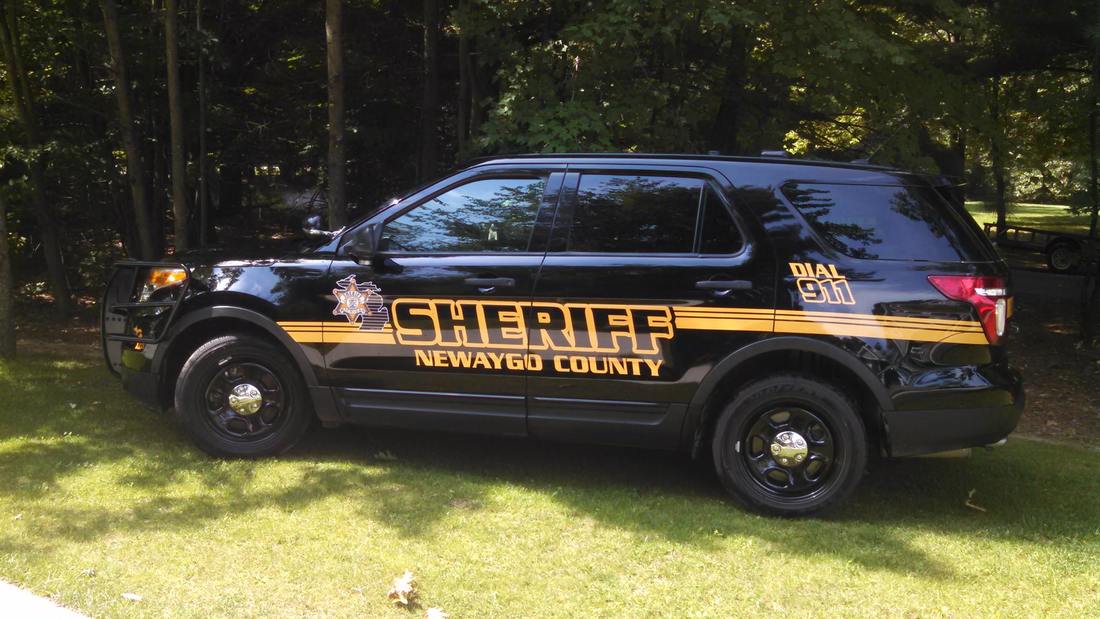 Starting with the 2 vying for Newaygo County's Top Badge
A couple of things… It’s a primary of course and the ‘real’ election for these offices is in November. However, in an area such as ours with a more than solid majority of voters consistently casting their ballots on the Republican side, the primary is THE election for county officials as well as most township boards. These are the folks who will truly impact local decisions. If the past is any indicator, just a bit more than 1 in 4 folks registered to vote will bother to actually cast their ballot. The turnout is generally around half of those who will exercise their voting rights in November so a small percentage of voters will decide who will be in county positions the next 4 years. The early voting. Saturday, July 27th is the first day of early voting. Sunday August 4th is the last day of early voting Absentee voter ballots can be obtained until 4pm on Monday August 5th. We submitted questions to each candidate for county-wide offices. The questions came from submissions from our readers and are the same for each candidate. We will be including the Sheriff, County Clerk, Register of Deeds and Drain Commissioner over the next few days. Newaygo County Sheriff Bob Mendham I was born and raised in White Cloud and graduated from White Cloud HS in 1983. My law enforcement career started in 1991 as a part time corrections officer at the Newaygo County Sheriff's Office. In 1995 I graduated from West Shore Community College with a Criminal Justice degree, and was then hired as a fulltime deputy in 1997. During my career at the Sheriff's Office, I served on the dive team, CMET, (The undercover drug enforcement team), I was the community policing officer and I was a K-9 handler for 8 years. In 2007, I accepted the Chief of Police position for the City of White Cloud and in 2015, I accepted the Chief of Police position for the City of Grant working both positions, and serving both cities, until I was elected the Newaygo County Sheriff in 2016. I have proudly held the position of Sheriff since then. My wife, Judy, and I were married in 1992 and have two sons, Brady, who is married to Heidi, and we were then blessed with a beautiful granddaughter, Harper. Our 2nd son, Rob, currently lives and works in Grand Rapids. Adam Mercer I am a lifelong resident and sixth generation of Mercers in Newaygo County. I graduated from Newaygo High School in 2000, went to college at Ferris State and the police academy at Kirtland Community College. I've been married to my wife for 15 years and we are raising three kids. As a family we spend a lot of time at sports practices and games and enjoy travelling Michigan and the U.S. in a school bus that we converted into an RV. I have 24 total years of law enforcement experience including 23 at the Newaygo County Sheriff's Office as marine patrol, school resource, road deputy, undercover, SWAT, detective, cold case, and road sergeant. I'm currently a road patrol deputy for the Kent County Sheriff's Office where I've been since May of 2023. I'm very proud of the positions I've held, cases I've worked on, and the people I've worked with. Why are you running? Mercer: I feel led to return to NCSO to rebuild the department to what it once was. I've been asked by numerous former and current NCSO employees to run for sheriff. Mendham: Holding the position of Sheriff has been a lifelong goal for me. Now that I hold the position, I understand the responsibilities and obligations that go along with the position. I believe serving the community is of utmost importance. What makes you the best candidate? Mendham: My 33 years of law enforcement experience makes me the best candidate. In those 33 years, I have learned to work with my community leaders and fellow law enforcement partners to accomplish goals that best serve our community. While serving our community, the position has given me experience and expertise in managing 80 employees, a 364 bed jail, a US Marshal contract, and an 8 million dollar budget. Mercer: In the 15 years I spent as a sergeant at NCSO I demonstrated compassion and loyalty to deputies, which at times included standing up for those who were being mistreated. I believe I've established a reputation as a strong leader who will support their subordinates when needed and take corrective steps when necessary. What do you see as the 3 main responsibilities of the post you are seeking? Mercer: 1. Appoint and train a management team that support, teach, lead, and care for the staff in the jail, road patrol, and animal control. 2. Work hand in hand with the four city PDs, MSP, and the DNR to provide top notch public safety to all citizens of Newaygo County. 3. Safely and securely manage the county jail. Mendham My main responsibilities include upholding the constitution of the United States and the constitution of the State of Michigan. Also, to enforce the laws of the State of Michigan while maintaining the jail, the animal shelter and ensuring the public's safety. How will you serve or better serve the public, if elected or reelected? Mendham: I will continue to serve the public by ensuring we have well trained and well equipped deputies who are willing and able to respond to any call for service. We will be transparent and strive to serve our community with integrity and respect. Mercer: I will not only listen to feedback, suggestions, and complaints from the public and police chiefs, but I will also take action when the suggestions and complaints have merit, or are in the best interest of the citizens and staff. I will also appoint leaders who selflessly work with the city PDs and MSP for the best interest of the public. County/State officials' responsibilities are not well known by the community members they serve. How will you educate your constituents and help them stay informed? Mercer: I will regularly attend township meetings, local high school sports, and Newaygo County restaurants for coffee and lunches to interact with the community Mendham: We will continue to use social media to communicate with the citizens of Newaygo County, and we will continue to work closely with our local media sources. We also support and attend community events. We will maintain an open line of communication with our local government partners. In your opinion what makes for an effective leader? Mendham: An effective leader must be willing to act, listen, compromise and admit mistakes. One must understand that the responsibility is to be available 24/7 and be willing to sacrifice personal and family time for the good of the community. An effective leader understands the community and their employees must come first. Mercer: An effective leader is different from a manager. A manager sits behind a desk, sends emails, and reviews employee work products. An effective leader leads by example, teaches employees how to be successful, and motivates them to be their best. An effective leader interacts with their employees by going to them and developing relationships. An effective leader challenges employees to not only set goals but helps them achieve the same. Tomorrow: Newaygo County Clerk  To the Editor: Every so often we stumble upon something in our lives that simply reminds us of the freedom of life that we all enjoy. Just a simple reminder such as this flag attached to this small little island on the South side of Hess Lake. For a third year this flag has emerged in this location and how that has happened is really not that important. What is important however, is that it should be a reminder to all who pass by it on whatever water vessel you may be on is what a great country we live in. Amidst all of the turmoil and political differences we experience each day, we must never forget that the United States of America is still the greatest country in the world. All of the freedoms that we enjoy were given at a cost by many and we should never forget that. May this flag be a simple reminder of this freedom to us all. May God bless America and those who protect our freedom ! Jerry Swendrowski Newaygo  To the Editor: I recently wrote a post for a private FB group page called "Fremont Digester and Lagoon Updates". It is the only FB group pages I know of in this county that was formed to bring community members together to try to get resolution to the problems of odors, land application spills, misinformation, etc that was the result of Generate Fremont Digester's operation at the food waste digester site in Fremont and at their two lagoons in Holton that hold the wastewater from their operations. That wastewater has been spread on thousands of acres of area farmland for the past 5 years under a previous permit which was found to be the wrong type of discharge permit and did not have the type of scrutiny the new permit will have. That being said, a permit is only good if the business operator chooses to follow its terms as the state cannot be up here 24/7 to monitor . The efforts of members of the FB group used up thousands of combined hours that we could have spent enjoying ourselves instead of babysitting the Digester and wastewater applicators and forcing the state to take action. It will be under a new permit that calls for more scrutiny than the last, but again, a permit is only as good if its terms are adhered to. I want to inform you of what I see as some concerning information within the geologic studies conducted by the state, esp in reference to what is actually in the wastewater (aka "digestate") being spread on area farmland and the potential threat it has to our area land and drinking water wells. When I saw information about the wells near True North Community Services and Holton Elementary being flagged as VERY HIGH RISK, I became very concerned. There are a multitude of other individual homeowner's wells with similar risk. We only have one chance to get this right and be assured that the spread of this wastewater isn't going to endanger area drinking water. I am sending this to many people, you included, as someone who I felt should see the information for a multitude of reasons. Please give this some serious thought and attention, and please seek answers from our state environmental agency, EGLE, to be sure that no decisions are made that are not right for our community. Thank you for your time. Kathy Morrison Fremont, MI To the Editor This past year I have often thought of the telephone game of my childhood. In that game, kids sat in a circle. Someone was pulled away from the group and a sentence was whispered to the child. Back in the circle, the child whispered the sentence to the next person. This continued until it reached the last person, who then repeated the sentence as heard. Laughter ensued because the sentence had changed, usually by quite a bit. The same thing is happening today, but now it's not a game. People are posting things on the internet, sometimes believing that what they are posting is correct, sometimes purposely straying from the truth. Others read these posts and pass them along. After several people have joined the chain, there is a good chance the information is not fact. This also happens in person, when people hear things they then pass on to others, at times embellishing them along the way. Other times they tell what they think they heard, but it wasn't the same. Listeners assume the information is fact and pass it on. Social platforms also pass on bad information. Much of what is posted on these platforms is generated by bots or by foreign intelligence and is false. For instance, Russia is flooding platforms with disinformation with the goal of influencing our 2024 elections. To do this they are trying to polarize Americans by undermining our trust of democratic institutions and by trying to divide Americans on the issue of US aid to Ukraine. They would love to see our democracy fail. By bombarding the internet with false information they also hope to confuse people so they won't vote. There are certain things we all need to do to protect our democracy. First, don't throw up your hands and decide not to vote because the information blitz is too confusing. Instead challenge yourself to find out the facts. This means you don't assume written or verbal statements are correct until you personally have obtained the same information from two reliable non-biased sources. Which sources can you trust? Some newspapers, television and radio programs, and social media platforms don't provide true facts because they don't fact check before publishing articles. Some of them don't even want you to know the truth. Beware! The Washington Post is one of the best newspapers to read because it checks the facts before printing. The New York Times also fact checks. Television news on BBC and CNN provide information that is more likely to be correct/complete than other stations that claim to give news but give false information. NPR radio provides facts. Studies done by universities, nonprofits, and other organizations not likely to gain politically from making false statements could be another good source of facts, if they aren't far left or far right schools, but, as always, look for two sources that agree. Two internet news sources that provide facts are Allsides and Propublica. Every news source makes mistakes, but this should be rare. Don't believe the first thing you hear or read. Check it out and only tell others when you have learned about it from at least two non-biased sources. And as you read, keep your mind open to new information. When we hear/read media bits over and over, it's easy to think that information is true. This is called brainwashing! Don't let someone else take over your brain! Instead, use it to sort out fact from falsehood so you aren't part of the chain that passes along misinformation. Becky Tuuk Fremont  State Sen Rick Outman State Sen Rick Outman LANSING, Mich. — Sen. Rick Outman issued the following statement after the Senate passed the state’s fiscal year 2025 budget plan: “I was available to negotiate, but many of my colleagues and I were left in the dark throughout the entire budget process as this one-sided spending plan came together shortly before it was presented to us for a vote. We were given nothing but speculation up until passage just after 4:30 a.m. Thursday morning. “I do my best to try and dig deep into issues so I can weigh the good versus the bad prior to choosing how I will vote — something I think is especially prudent when it comes to budgeting and this type of large-scale spending — but we were not afforded that opportunity. “Despite the massive price tag made possible by a $700 million tax increase and taking $670 million from the teacher retirement fund, this plan fails to include an increase in K-12 per-pupil funding for the first time in years, cuts student safety and mental health funding, does not adequately invest in our roads or infrastructure, and only further burdens taxpayers down the road with over 450 new government positions that future lawmakers will have to account for. “The people of my district sent me to Lansing to be their voice in government, not to blindly spend their money. We have a duty to be good stewards of taxpayer dollars, so ultimately, I voted no on this budget.”  A hopeful spring goes south for the Tigers
By Ken De Laat “A good friend of mine used to say, 'This is a very simple game. You throw the ball, you catch the ball, you hit the ball. Sometimes you win, sometimes you lose, sometimes it rains.' Think about that for a while.”- Nuke Laloosh, Bull Durham “I see you haven’t written anything about the Tigers lately?” The question didn’t seem to be an inquiry based on wanting to see more of my perpetually optimistic assessments of the team and was tinged with that sprig of sarcasm friends delight in delivering to each other when previous predictions go south. And mine certainly did. From my Opening Day column: "But hey, I’m a Tiger fan. I think the pitching staff will most certainly live up to its billing and those young guys are going to feed off each other sharing some hot batting streaks up and down the order. Carpenter and Torkelson will be our first pair of 30 dinger guys since Miggy and J.D. did it in 2015 and Colt Keith turns out to not just be the real deal but puts together a rookie of the year season. The bullpen is chock filled with lively arms and A.J. Hinch has finally got the talent that allows him some room for creative managerial moves." And my hopes for a magical season that began with a 5-0 start (thanks to schedulers giving us the White Sox and Mets) now has the Bengals languishing 15 games behind the smoking hot Guardians and 61/2 games out of a wild card spot with 5 teams in front of them. Nope, no playoffs. The duo of Torkeleson and Carpenter I hoped would be combining to rock the house with homers were derailed by Tork’s puzzling inability to hit that bought him a ticket to Toledo and Carpenter’s injury. Greene has been prone to slumps, Keith at second has improved after a brutal start and speaking of brutal starts Parker Meadows was mercifully sent down when he was unable to squeak his average into triple figures. Then there’s Baez, turning out to be the worst long term signing since Jordan Zimmerman floundered on the mound for 5 years back in the teens. The shuffle of players from the Mud Hens hasn’t helped much yet and I am struggling to recall when Baddoo actually had a decent bat. Pitching-wise Skubal is the real deal and Olson, though roughed up a couple times, has generally pitched great with zero run support. Almost uncannily poor run support The bullpen began well but has become a mess. This is just not a very good baseball team right now. Though guilty as charged for the preposterous predictions, truth is, I wasn’t quite as rosy about the season as my column may have indicated. While it was fun to see them get hot early I wrote this to my brother and fellow lifetime Tiger fan after the previous column: “The team is, of course, destined to fail. To go through what young teams do as the Tigers did in the early 80’s. Learning how to win when you shouldn’t and carrying a swagger that as Dizzy said so eloquently, ‘It ain’t braggin’ if you can back it up.” They won’t hit with any consistency unless they can channel the ghost of Charley Lau but on occasion they’ll look awesome. In 2015 they started 6-0 after sweeping the Twins and Cleveland. Even got to 11-2. Ended up 74-87 and Dombrowski left in August replaced by Avila aka the Ned Harkness/Matt Millen of the Tigers. It’s been a long decade since.” Ok, again, no playoffs this year. Likely a trade or two dangling Flaherty and/or someone from the bullpen since few other players would yield much in return. But we are going to see a lot of players over the second half of the season in an effort to get the right mix and maybe there will be a few winning streaks to get excited about or a previously unsung player who gets on a hot run. As for me? They have always been my team and always will. I’ve followed them when they were good and when they were really, really good. I’ve also been with them through a multitude of mediocre seasons, some bad seasons and some really, really bad seasons. And while the good ones are way more fun? I’ll be tuning in right through that last home series against the White Sox ( a team playing like the Pistons of baseball). After all, it’s the Tigers. Note: R.I.P Mr. Mays. Circa 1960 I was at a Braves/Giants game with my family at old County Stadium. On the field were Hank Aaron, Eddie Mathews, Warren Spahn, Willie McCovey, Orlando Cepeda, Juan Marichal and you, the best ballplayer I ever saw play the game. |
Letter to the Editor PolicyNear North Now welcomes original letters from readers on current topics of general interest. Simply fill out the form below. Letters submissions are limited to 300 words. Archives
July 2024
Categories |


 RSS Feed